

If you’re struggling with the burden of debt, you’re not the only one. Millions of Americans are faced with financial difficulties each year because of unexpected medical bills, job losses and reduced income divorce, rising cost of living or credits on their credit cards.
When debt becomes too difficult to manage, a lot of people start looking for solutions to ease the burden, like Debt Settlement Attorneys, debt settlement and credit counseling, debt consolidation loan, Chapter 7 bankruptcy, and Chapter 13 bankruptcy. Each solution is created to assist consumers in regaining financial stability, but knowing the best option for your particular situation could be a bit confusing.
The choice becomes difficult when collection agencies and creditors call regularly, minimum payments keep increasing and interest costs keep rising and it becomes difficult to make significant progress towards getting debt-free. In these instances, the majority of consumers begin looking for help from a professional and frequently encounter debt settlement lawyers as a possible solution.
One of the most common questions people ask is:
Do I need a debt settlement attorney?
The answer will depend on many variables, including the kind of debt you’re in as well as the total quantity you’re due, your earnings and assets, if you’re behind on your payments and if creditors have brought suits against you. In certain situations the debt settlement lawyer is able to directly negotiate with creditors to lower amounts and negotiate more affordable repayment agreements. In other instances bankruptcy could provide greater legal protections as well as a more efficient path to financial recovery.
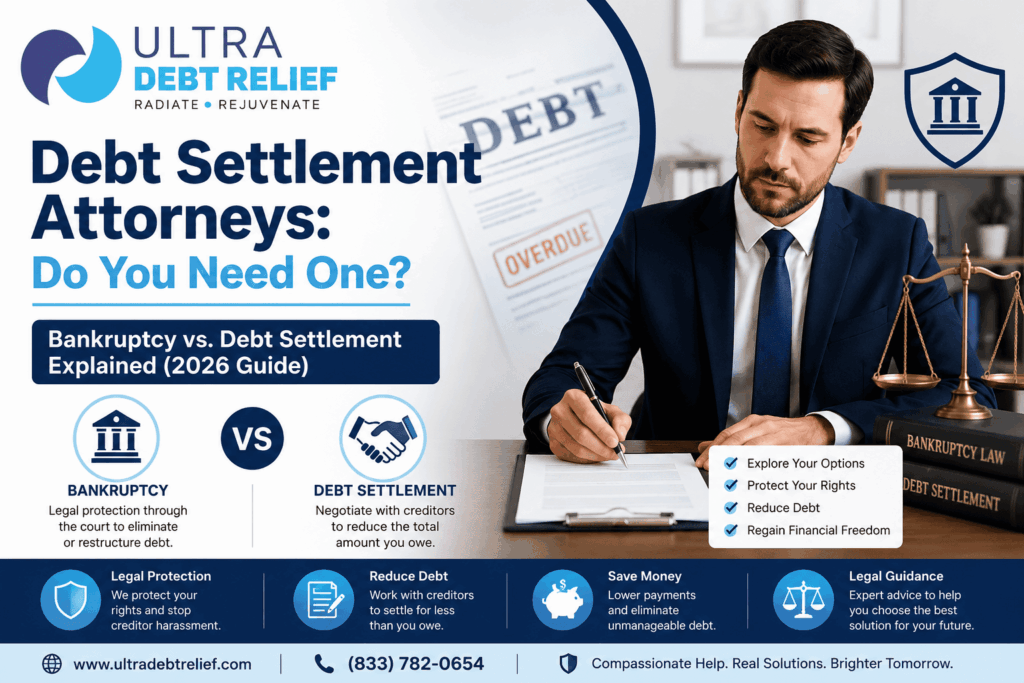
Understanding the difference between bankruptcy and debt settlement is essential prior to taking any financial decisions. While debt settlement is focused upon negotiating with lenders in order to take less than the entire amount due and bankruptcy can be a legally-enforceable procedure under federal law that may allow debt to be eliminated or reorganized under the supervision of the court. Both options have pros as well as disadvantages which is why the most appropriate decision is different for each individual.
An experienced debt settlement lawyer will evaluate your financial situation and explain your legal rights and engage in your favor with the creditors and assist you in determining if the debt settlement process, Chapter 7 bankruptcy, Chapter 13 bankruptcy, or another method of debt relief is the best option for you. Expert advice is especially beneficial if you’re facing wage garnishments, collection lawsuits or foreclosure threats, bank levies or a significant amount of unsecured debt.
In this article we’ll look at the way debt settlement attorneys operate in the event that hiring one might be advantageous and how the process of debt settlement is different from Chapter 7 bankruptcy, Chapter 13 bankruptcy as well as debt consolidation. Learn about the main aspects, benefits, disadvantages, as well as the most important aspects to think about so you are able to make a well-informed decision regarding your financial situation and move on towards becoming debt-free.
What Is a Debt Settlement Attorneys?
A debt settlement lawyer is a legally licensed professional who aids businesses and individuals negotiate with creditors in order to reduce the amount they have to pay. Instead of paying the entire amount, creditors can offer an amount that is lower in lump sum and a structured settlement which allows borrowers to settle outstanding debts at a lower cost than the amount of the original debt.
Debt settlement attorneys utilize their legal expertise and negotiation skills to speak directly with collectors, creditors as well as debt purchasers on behalf of clients.
Unlike traditional debt settlement companies, attorneys can provide legal advice tailored to your specific financial situation. This can be particularly valuable when dealing with complex debt issues, collection lawsuits, wage garnishments, or creditor harassment. Because attorneys are licensed professionals, they are also bound by professional and ethical standards that require them to act in their clients’ best interests.
One of the primary advantages of working with a debt settlement attorney is the ability to receive comprehensive legal guidance. An attorney can evaluate your overall financial condition, explain your rights under federal and state consumer protection laws, review settlement agreements before you sign them, and help ensure that negotiated settlements are legally sound and properly documented. If a creditor files a lawsuit against you, an attorney may also be able to represent you in court and negotiate a resolution before a judgment is entered.
Debt settlement attorneys can also help determine whether debt settlement is truly the most effective option. In some cases, alternatives such as debt consolidation, credit counseling, Chapter 7 bankruptcy, or Chapter 13 bankruptcy may provide greater financial relief. An attorney can compare these options and explain the potential benefits, risks, costs, and long-term consequences of each approach so you can make an informed decision.
The majority of debt settlement lawyers work with a range of unsecured debts, which include credit balances on credit cards and medical bills, personal loans, collection accounts, and certain obligations related to business that aren’t secured by collateral. Since unsecured debts do not have assets like cars or homes, they are more inclined to negotiate settlements if they think that recovering the entire amount may be difficult.
For those who are facing financial difficulties, rising collections pressure or the threat of legal action by creditors an attorney for debt settlement can offer legal protection as well as strategic guidance throughout the process of debt resolution. The goal of their services is to help clients lessen the burden of financial debt, settle outstanding debts, and work towards a more secure financial future.
When Should You Hire a Debt Settlement Attorneys?
It is possible to be able to benefit by hiring an attorney to negotiate your debts If:
You’re Being Sued by Creditors
If the creditor has filed a lawsuit against you, an attorney can help defend the client and reach a compromise prior to the judgment is signed.
You Have Large Amounts of Debt
Consumers with between $20,000 and $100,000plus in unsecure debt typically receive assistance from an expert in negotiation.
You Need Legal Protection
Attorneys are knowledgeable of federal and state law regarding debt collection and can detect the violations committed by collectors.
You’re Considering Bankruptcy
An attorney can help you compare the options of debt settlement and bankruptcy to decide which offers the most financial relief.
Bankruptcy vs Debt Settlement: What’s the Difference?
Many consumers compare bankruptcy or debt settlement before making a decision.
| Feature | Debt Settlement | Bankruptcy |
|---|---|---|
| Court Involvement | No | Yes |
| Public Record | No | Yes |
| Debt Reduction | Partial | Significant or Complete |
| Credit Impact | Moderate to Severe | Severe |
| Time Required | Months to Years | 3-5 Years |
| Asset Risk | Low | Depends on Bankruptcy Type |
| Legal Protection | Limited | Strong Federal Protection |
Debt settlement focuses on negotiating reduced balances, while bankruptcy uses federal laws to eliminate or restructure debts.
Is Bankruptcy Better Than Debt Settlement?
A common question is:
The answer depends on:
Debt Settlement May Be Better If:
- You earn a steady income
- You can pay for settlements.
- You’d like to avoid court hearings
- You want to stay clear of bankruptcy filings on your record
There’s no universal solution. Your earnings assets, debt levels and your future goals are important.
Chapter 7 Bankruptcy vs Debt Settlement
The most frequent contrasts can be Chapter 7 bankruptcy vs debt settlement.
What Is Chapter 7 Bankruptcy?
Chapter 7 bankruptcy is often referred to as “liquidation bankruptcy.”
It could be able to be able to eliminate:
- Credit card indebtedness
- Medical debt
- Personal credit
- Accounts for collection
The majority of Chapter 7 cases are completed within 3 to 6 months.
Advantages of Chapter 7
- Fast debt elimination
- Automatically stopped collection stops
- It could wipe out the majority of unsecure debt
Disadvantages of Chapter 7
- Credit report remains on file in the period of up to 10 years
- Certain assets could be at risk
- Not everyone qualifies
Debt Settlement vs Chapter 7
| Factor | Debt Settlement | Chapter 7 |
|---|---|---|
| Court Filing | No | Yes |
| Qualification Requirements | None | Means Test |
| Debt Forgiveness | Partial | Often Complete |
| Time Frame | 1-4 Years | 3-6 Months |
| Public Record | No | Yes |
For consumers with severe financial hardship, Chapter 7 may provide more comprehensive relief than debt settlement.
Chapter 13 Bankruptcy vs Debt Settlement
Another typical contrast can be Chapter 13 bankruptcy vs debt settlement.
What Is Chapter 13 Bankruptcy?
Chapter 13 allows people to arrange the debt using a plan of repayment that lasts from up to three years.
Instead of immediately eliminating debt, Chapter 13 creates structured payments that are based on income.
Benefits of Chapter 13
- Stops foreclosure process
- Stops the repossession
- Stops collection lawsuits
- Allows debt repayment over time
Drawbacks of Chapter 13
- Long repayment period
- Court supervision
- Costlier than many settlement programs. More expensive than some settlement
Debt Settlement vs Chapter 13
When comparing debt settlement vs Chapter 13, consider the following:
| Factor | Debt Settlement | Chapter 13 |
|---|---|---|
| Monthly Payments | Flexible | Court Ordered |
| Creditor Participation | Voluntary | Mandatory |
| Collection Protection | Limited | Strong |
| Foreclosure Protection | No | Yes |
| Public Record | No | Yes |
Consumers trying to save a home often find Chapter 13 more effective because bankruptcy protections can stop foreclosure actions.
Chapter 13 vs Debt Settlement: Which Saves More Money?
The amount of money saved varies based on:
- Total debt balance
- The willingness of the creditor to negotiate
- Attorney’s fees
- Bankruptcy eligibility
- Income from the household
Debt settlement may reduce balances by negotiating lower payment amounts and Chapter 13 may allow repayment of a small portion of debt that is not secured by a plan that is approved by a court.
A qualified attorney can estimate savings under both scenarios.
Debt Settlement vs Bankruptcies: Key Considerations
When you are comparing the debt settlement process versus bankruptcies consider:
Can You Afford Settlement Payments?
Settlement typically will require lump sums of money or structured payments.
Are Lawsuits Pending?
Bankruptcy provides stronger legal protection.
Do You Have Significant Assets?
Rules for protecting assets vary according to state and chapter of bankruptcy.
How Quickly Do You Need Relief?
Chapter 7 may resolve debt sooner than settlement programs.
Bankruptcy vs Debt Settlement vs Consolidation
Many consumers are also considering the possibility of consolidating debt.
Debt Consolidation
Debt consolidation consolidates several debts into a single payment.
Common methods are:
- Personal credit
- Credit cards that allow balance transfer
- Home equity loans
Debt Consolidation Works Best When:
- Credit score is still relatively good
- You may be eligible for lower rates of interest.
- You are able to earn a reliable income
Comparison Table
| Solution | Best For | Main Benefit |
|---|---|---|
| Debt Settlement | Large unsecured debt | Reduced balances |
| Debt Consolidation | Good credit borrowers | Simplified payments |
| Chapter 7 Bankruptcy | Severe hardship | Fast debt elimination |
| Chapter 13 Bankruptcy | Asset protection | Structured repayment |
Pros and Cons of Hiring a Debt Settlement Attorney
Pros
- Legal expertise
- Creditor negotiation experience
- Lawsuit defense capability
- Bankruptcy evaluation
- Consumer protection knowledge
Cons
- Legal fees
- No guarantee creditors will settle
- Settlements may take time
- Credit score impact remains possible
How to Choose a Debt Settlement Attorney
Before hiring an attorney:
Ask About Experience
Look for attorneys who regularly handle debt settlement and bankruptcy cases.
Understand Fees
Request a written explanation of all costs.
Verify Licensing
Confirm the attorney is licensed in your state.
Review Client Feedback
Look for verified reviews and professional credentials.
Final Thoughts
It doesn’t matter if you’re considering the advantages of bankruptcy and the debt settlement, Chapter 7 bankruptcy and credit settlement, Chapter 13 bankruptcy against debt settlement or bankruptcy and debt settlement or consolidating, the best option is based on your specific financial situation.
A debt settlement lawyer will help you evaluate all options and negotiate with creditors and determine if bankruptcy might provide more long-term relief. For those who are facing lawsuits or aggressive collection efforts or a burdensome debt load Legal guidance is particularly beneficial.
Before you make a choice think about your assets, income in addition to debt, as well as your financial objectives. Knowing the difference between bankruptcy and debt settlement will be the very first thing you need to do towards getting control over your financial situation.ep toward regaining control of your finances.