
It is easy to become overwhelmed when you have several credit cards as well as medical bills, personal loans along with other debts vie for your monthly earnings. Many Florida residents face rising living expenses, emergencies, and high-interest debt, which make it challenging to maintain financial stability.
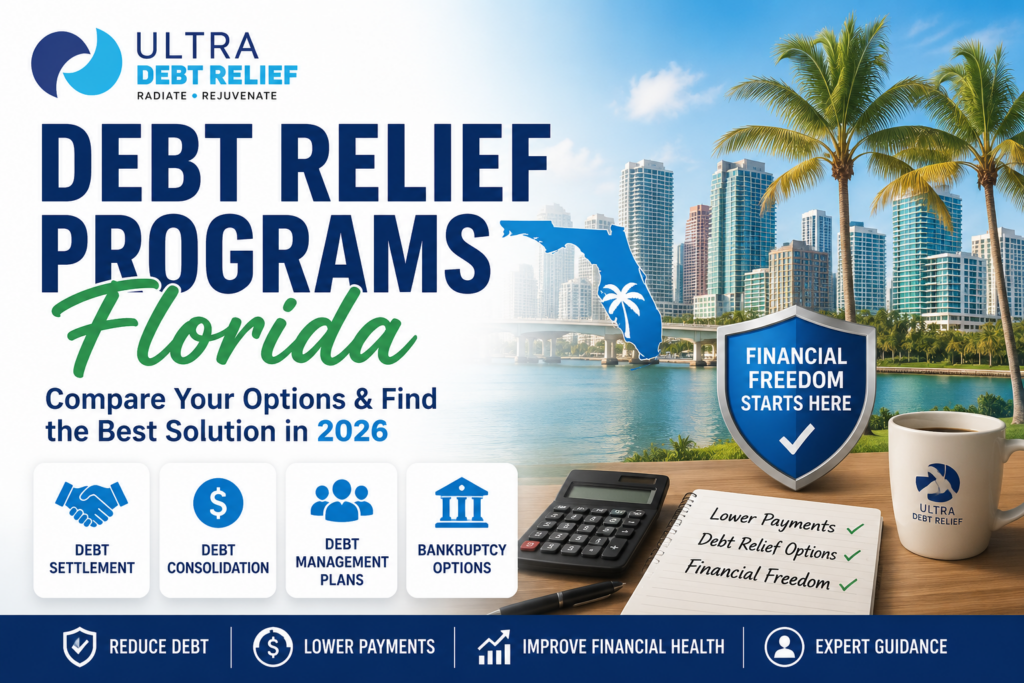
There are a variety of Debt Relief Programs Florida are in place to assist consumers in gaining control of their financial situation. No matter if you’re facing personal loans or collection accounts, knowing the options available will help you decide on the right path towards financial freedom.
In this article we’ll go over the most popular programs to help with debt in Florida with their benefits and drawbacks, eligibility requirements, and the best way to select the best option for your particular situation.
What Are Debt Relief Programs?
Debt relief programs offer financial solutions that help people reduce their debt, manage it, or pay off the debt more efficiently. Based on the type of plan, debt relief might include negotiating lower balances, cutting interest rates, combining multiple debts into a single payment, or even implementing the perfect repayment program.
The main objective for debt relief is making debt manageable and help people avoid long-term financial strain.
Debt Relief May Help If You:
- Struggle to make minimum monthly payments
- Carry significant credit card debt
- Receive collection calls regularly
- Have missed loan payments
- Are considering bankruptcy
- Want a structured plan to become debt-free
Types of Debt Relief Programs Florida
1. Debt Settlement
Negotiating with creditors in order to reduce the amount due. A debt settlement business or negotiator negotiates with creditors to negotiate an amount that is lower than the total amount owed.
Benefits
- It could reduce overall debt
- Payoffs faster compared to minimum payments
- Can help avoid bankruptcy
Drawbacks
- Can have an impact on credit scores
- Creditors aren’t required to pay
- Charges could apply.
Debt settlement is usually viewed by those with a large amount of unsecured financial obligations, such as credit card balances as well as personal loans.
2. Debt Consolidation
Debt consolidation consolidates multiple debts into one loan or monthly installment. This method makes debt management easier and could reduce interest costs.
Benefits
- One monthly installment
- Easier budgeting
- The possibility of lower interest rates
- Simple Financial management
Drawbacks
- Certain qualifications may be required.
- Does not automatically reduce principal debt?
- Insufficient payments can cause other problems.
Debt consolidation is best suited to those with steady incomes and fair credit.
3. Credit Counseling
Credit counseling firms offer financial education, budgeting assistance, as well as advice on managing debt.
A certified counselor will review your financial situation and suggests ways to reduce the amount of debt and improving overall management.
Services Typically Include:
- Budget analysis
- Review of debt
- Financial education
- Repayment planning
- Debt management program recommendations
4. Debt Management Plans (DMPs)
The Debt Management Plan permits customers to make a monthly installment through an counseling agency that makes payments to the creditors.
Advantages
- Interest rates are reduced
- One monthly payment
- Structured repayment schedule
- Professional assistance
Considerations
- Requires consistent payments
- It may take several years for be completed
- Certain credit accounts could be closed
5. Bankruptcy
It is usually regarded as the last option to resolve debt.
Chapter 7 Bankruptcy
Can end qualifying unsecured debts with liquidation.
Chapter 13 Bankruptcy
The plan is approved by the court that spans several years.
Although bankruptcy can offer significant relief, it can also have long-term implications for credit that should be examined with an experienced lawyer.
Common Causes of Debt Problems in Florida
Many Floridians face financial challenges because of circumstances that are that are beyond their reach.
Credit Card Debt
Credit cards that charge high interest can turn into a challenge to control if the balances keep increasing.
Medical Expenses
Healthcare costs that are not anticipated remain an important cause of financial stress.
Job Loss or Reduced Income
Unemployment can make debt repayment difficult.
Inflation and Rising Living Costs
Utilities, housing, insurance and other expenses that are commonplace remain a major factor in household budgets.
Emergency Expenses
Unexpected repairs to cars or home repairs family emergencies can lead to an increase in borrowing.
Signs You May Need Debt Relief
You could be able to benefit from a debt relief program in the following situations:
- Your debt is growing each month
- Credit cards are your go-to to pay for your daily costs
- Collection agencies are in touch with you often
- You can only make minimum payment
- You’ve missed a number of payments
- Your ratio of debt to income is too excessive
- Stress from financial problems can impact your life quality
Being aware of these warning signs in the early stages will help avoid further financial problems.
Benefits of Debt Relief Programs
Lower Monthly Payments
A variety of debt relief options can make monthly obligations less burdensome and repayment easier to manage.
Simplified Finances
Making one payment instead of multiple accounts can help with the efficiency of budgeting and organizing.
Reduced Financial Stress
Repayment plans that are structured provide the clearest path to debt reduction.
Potential Interest Savings
Debt management and debt consolidation programs can help lower interest charges.
Faster Debt Payoff
A lot of consumers are debt-free earlier than if they were to make minimal payments for the rest of their lives.
Potential Drawbacks of Debt Relief Programs
Although debt relief can provide many benefits, it is important for consumers to be aware of the the potential dangers.
Credit Score Impact
Certain programs can temporarily impact credit scores.
Fees
Certain service providers, such as debt management or settlement, require fees.
Tax Consequences
The forgiveness of debt could be tax-related.
Qualification Requirements
Not everyone is eligible for all debt relief options.
Reviewing the program’s details prior to signing up is vital.
How to Choose the Best Debt Relief Program in Florida
Evaluate Your Total Debt
Different options work best based on the debt amount and the kind.
Review Your Income
Your monthly income affects the repayment options available and program eligibility.
Understand Program Costs
Compare the cost of fees with interest rates, fees, and the potential for savings.
Research Provider Reputation
Select reputable businesses that have transparent practices and positive feedback from customers.
Consider Long-Term Goals
Find a solution that works with your financial goals and your plans for the future.
Debt Relief vs. Debt Consolidation
| Feature | Debt Relief | Debt Consolidation |
|---|---|---|
| Purpose | Reduce debt burden | Simplify repayment |
| Monthly Payments | Often reduced | Combined into one payment |
| Credit Impact | May be significant | Typically less impact |
| Debt Reduction | Possible | Usually no balance reduction |
| Timeline | 2–4 years | 3–7 years |
Both options can be effective depending on your financial circumstances.
Steps to Get Started
Step 1: Review Your Debt
Check all balances, the rate of interest, as well as monthly payment.
Step 2: Create a Budget
Find out how much you can be able to be able to afford each month.
Step 3: Explore Available Options
Compare the debt settlement with counseling, consolidation, and management strategies.
Step 4: Speak With a Debt Specialist
A professional assessment will aid in determining the best solution.
Step 5: Commit to a Plan
Discipline and consistency are crucial to long-term success.
Common Financial Challenges Facing Florida Residents
The population growth in Florida and the rising costs of living has led to problems for families with financial obligations. Some of the most prevalent issues relating to debt are:
Rising Housing Costs
The cost of housing and rent have significantly increased in many Florida cities, which makes living costs one of the biggest costs for homeowners.
High Property Insurance Premiums
Florida homeowners are often faced with some of the most expensive property insurance rates in the United States due to the risk of hurricanes and claims related to weather.
Credit Card Debt
A lot of people rely on credit cards to pay for the cost of their everyday life, resulting in excessive interest debt that becomes challenging to control.
Medical Expenses
The unexpected medical costs and bills can swiftly cause financial strain, especially those who do not have adequate insurance coverage.
Auto Loan Debt
A lot of Florida people depend upon their personal automobiles to get around, which can result in substantial monthly payments for auto loans.
Student Loan Debt
Students who graduate from college often have student loan balances which can limit their capacity in saving, investing or settle other loans.
Inflation and Higher Living Expenses
The price of food and utilities, as well as transportation and other necessities of daily life continue to impact the budgets of families across Florida.
Job Loss or Reduced Income
The uncertainty of the economy, job cuts, and reduced hours of work can make it difficult for people and families to meet the debt repayments.
Natural Disasters and Hurricane Recovery Costs
Florida is often a victim of storms and extreme weather events which can result in unexpected repair costs as well as temporary income losses and a further financial burden.
Why Debt Relief Programs Matter in Florida
Due to these financial difficulties due to these financial challenges, a lot of Florida residents are looking for options for debt relief, such as debt settlement and debt consolidation management programs, and credit counseling & Government debt relief programs florida also helps . These programs can help customers ease financial strain, streamline payments, and establish an organized path to becoming debt-free.
Why Trust Our Debt Relief Research?
Our editorial team is constantly researching programs for debt relief as well as consumer finance trends, strategies to settle debts and debt management strategies to provide up-to-date and accurate information. We examine industry-specific data as well as consumer resources, programs’ requirements, and the best financial practices to assist readers in making educated decisions.
The content we provide is intended to educate and regularly reviewed to ensure its accuracy, transparency and relevance. We aim to present complicated financial concepts in a straightforward and easy to understand manner that people can easily consider their debt relief options.
Our Debt Relief Evaluation Methodology
When we evaluate debt relief options we take into consideration several key elements:
- Transparency and transparency practices for programs
- Reviews of customers and the reputation of the company
- Available debt relief options
- Requirements for qualification
- The typical timeline for completion
- Costs and fees
- Customer support availability
- Educational resources are provided to customers
This method helps us find solutions to reduce debt that focus on consumers’ needs as well as the long-term stability of financial resources.
Real-World Debt Relief Example
Take into consideration the possibility of a Florida resident who is carrying:
- $18,000 of credit card credit card
- $7,000 in personal loan debt
- $5,000 for medical expenses
With multiple monthly installments as well as high rates of interest, managing your debt could be difficult. Depending on the eligibility of the borrower for debt consolidation, a debt management plan can help simplify payments into one monthly obligation. In certain situations the debt settlement option can aid in reducing the amount due.
Although every financial situation differs, seeking expert guidance early can provide greater options and more favorable outcomes.
Expert Advice
As a debt relief expert, my advice to people across the USA is to avoid taking on a heavy burden of loans or credit whenever possible. Many consumers take multiple loans without fully understanding the long-term financial impact, and later find themselves struggling with monthly payments, interest charges, and growing debt balances.
My advice for Florida residents is to address debt problems as early as possible. If you wait too long, loan problems can increase significantly, leading to higher balances, additional fees, and increased financial stress. Financial challenges can happen to anybody, but taking action early usually provides more options and better outcomes.
I have seen consumers benefit from debt settlement programs and debt management solutions when they choose the right program for their situation. A good debt settlement plan can help reduce financial pressure and provide a structured path toward resolving debt over the long term.
Before joining any debt relief program, carefully read the terms and conditions, understand all fees and costs involved, and research the provider’s reputation. Florida debt relief programs can be helpful, but consumers should always make informed decisions and work with reputable companies.
A structured debt relief strategy can help simplify repayment, reduce financial pressure, and put you on a path toward greater financial stability and long-term financial freedom.
Final Thoughts
The programs for debt reduction in Florida offer a variety of options for those seeking financial relief. If you’re dealing with debt from credit cards or personal loans, medical bills or any other debt that is not secured knowing what options are available can assist you in making informed choices.
Through analyzing your finances, comparing different programs and seeking out professional advice whenever necessary, you will be able to create a plan that is realistic to cut down on debt, improve your financial condition, and work towards a debt-free life.
Author Note: This article is for informational purposes only and should not be considered legal, tax, or financial advice. Consumers should consult qualified financial professionals before making debt-related decisions.
Frequently Asked Questions
What is the most effective program to help with debt in Florida?
The ideal program is contingent upon the financial condition of your household. Settlement of debt consolidation, and debt management programs can be among the more popular choices.
Does debt relief hurt your credit score?
Certain debt relief programs could affect credit scores for a short period While other programs may only have a minimal impact.
What amount of debt do you need to be able to qualify?
The requirements for each provider differs based on the type of program. Most program types require that you pay a certain number of unsecure debt.
Do you think debt consolidation is better than debt settlement?
There is no universally superior option. The best choice is contingent on your amount of debt, credit score and repayment capacity.
How long will the process of resolving debt take?
The majority of programs last anywhere between 2 and 5 years according to the option selected as well as the level of debt required.
How long will the process of resolving debt take?
The majority of programs last anywhere between 2 and 5 years according to the option selected as well as the level of debt required.
Does debt relief help the burden of credit card credit card
Yes. credit card debts are among of the most commonly encountered kinds of debts that are addressed by programs for relief.