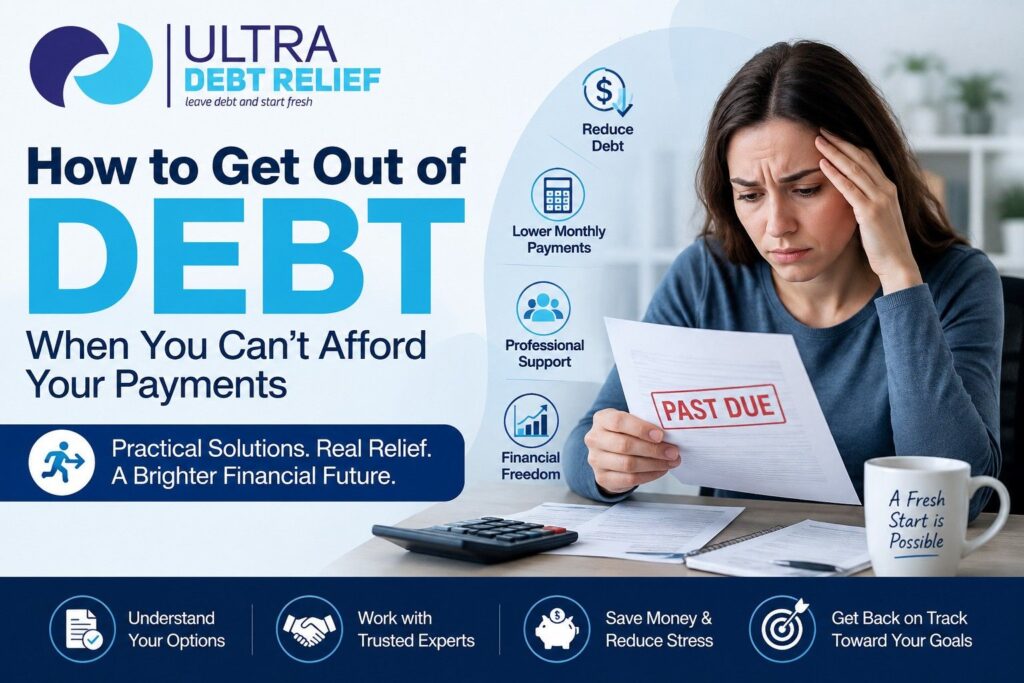

If your monthly debt obligations exceed the amount your budget can be able to bear, “just paying it every month” ceases to be a strategy. There could be a shift in the balances between credit cards, or ignoring deadlines, taking out loans to pay for food, or making a choice between paying a debt or rent. If none of this means that you’re in the dark. It suggests it’s time to move from managing to strategy.
This guide will explain precisely How to get out of debt & what you need to do in order: How to evaluate the real value of your numbers, how to decide which bills are paid first, what you should tell your creditors and the way each of the major relief options, such as debt management programs, hardship programs and settlements, consolidation, and bankruptcy, performs, as well as the tradeoffs they each carry.
A note about sourcing: Where this article refers to regulations or protections, it relies upon the guidance issued by the Federal Trade Commission (FTC), the Consumer Financial Protection Bureau (CFPB), and the IRS. The laws and details of programs are subject to change and may differ from state to state, so use this article as a guideline but not an alternative to advice from an expert credit counsellor, bankruptcy attorney, or tax expert who can analyze your specific numbers.
What Should You Do If You Can’t Afford Your Debt Payments?
If you can’t afford your monthly debt repayments, the initial step should be to avoid panicking and get an additional loan with a high interest rate immediately. Instead, you should determine how much cash you’ll have after you have paid for your essential expenses of living.
The most effective method is
- Write down every debt along with its minimum amount to be paid.
- Find out your monthly take-home earnings.
- Distinguish essential costs from discretionary spending.
- Find out how much you could afford to pay for the debt.
- Contact your creditors before the situation gets more dire.
- Compare the repayment, consolidation, debt management, bankruptcy, and debt settlement alternatives.
- Avoid companies that offer immediate debt forgiveness or require unsubstantial upfront costs.
It is recommended that the Federal Trade Commission recommend contacting creditors before you start getting behind and ask if you can negotiate a new arrangement for payment or if a lower amount of payment might be offered.
Step 1: Get an Honest Picture of Your Numbers
Avoidance feels protective in the moment, but it’s usually what turns a manageable problem into an unmanageable one. Start with plain accounting.
List every debt, including:
- Creditor name
- Current balance
- Interest rate (APR)
- Minimum payment
- Due date
- Whether it’s secured (backed by an asset, like a mortgage or auto loan) or unsecured (credit cards, medical bills, most personal loans)
List your monthly net income what actually lands in your account after taxes and deductions.
Separate essential expenses from everything else:
Separate essential expenses from everything else:
| Essential (pay first) | Usually flexible |
|---|---|
| Housing (rent/mortgage) | Subscriptions |
| Utilities | Dining out |
| Groceries | Non-essential shopping |
| Health insurance | Upgraded phone/internet plans |
| Transportation needed for work | Entertainment |
| Minimum required debt payments | Travel |
Do the subtraction. Net income less essential expenses tells you how much is really available for credit. If your minimum debt payments are in excess of that amount, then you’re not facing an issue with budgeting. You’re facing an imbalance in the structure between the amount you owe and the income you earn. That requires an overall solution that goes beyond cutting down on coffee.
Example: Take-home earnings of $4,000, with essential expenses of $3100, leaving $900. If the minimum debt amount is $1300, it’s a 400-dollar monthly shortfall—one that tightening budgets will not close.
Step 2: Decide What Gets Paid First
If you’re not able to manage everything, you must triage the situation. The majority of debts are classified into three risk levels:
- Secured loans tied to necessities like the mortgage you have, a loan to purchase a car that you require to get to work, or your utility bills. In the event of a default, you could lose transportation, housing, or heating, so they are typically the first to claim the money available.
- Debts that have faster legal consequences—some unpaid tax bills or debts that depend on the state in which you live could lead to garnishments on wages.
- Credit that is not secured—including medical bills and the majority of personal loans. If you don’t pay these, it can be extremely damaging (fees and credit score impacts as well as potential collections). However, the immediate consequences are generally less serious than losing your house.
This doesn’t mean you must abstain from credit cards; it’s that you must choose the best option. Putting your home and transportation first is the better option.
Step 3: Contact Creditors Before They Contact You
This is the one that most people avoid out of fear and is usually the most leveraged option available. The FTC’s general advice to those in financial trouble is to contact creditors before they are late and inquire directly regarding a new payment arrangement.
If you contact us, make sure you specify the information you’re seeking:
- A temporary program of hardship
- A lower monthly payment
- Lower interest rates
- Refused late fees
- A short payment extension
- A revised repayment plan
Creditors aren’t required to accept a request; however, money is. They may prefer to modify terms rather than have accounts become insolvent. If you come to an agreement, whether with a lender or with a debt collection agency or debt collector, make it clear in writing prior to sending money. The CFPB specifically recommends putting any settlement or repayment conditions in writing. Verbal agreements are difficult to enforce later in the event that there is a dispute.
Step 4: Be Careful About Solving Debt With More Debt
When the cost of payments is too high, a credit card or loan may appear to be a relief. Sometimes, it’s—but often it’s simply a means of relocating the problem:
Personal debit card, cash advances, another loan
Before committing to new credit to pay for existing debt, you should be sure to ask:
- What is the current rate of interest in addition to any promotional rate expiration date?
- What are the fees (origination and balance transfer closing) that are charged?
- What will the next monthly installment be? And for how many months?
- Can I keep my paid-off credit cards open and be at risk of getting them back?
- What happens to this plan in the event that my income declines?
All of this doesn’t mean that there is no chance for consolidation. It simply implies that the math has to be able to work and not feel relieved this month.
Step 5: Compare the Core Relief Options
Debt Management Plans (DMPs)
A credit counseling organization that is not for profit examines your financial situation, and if necessary, it sets up a single monthly installment, which it then distributes to your creditors, typically with a lower rate of interest or fees waived that it negotiates for you.
A good choice if you earn it each month and can pay for it each month, but your debt is generally non-secure, and you’d like to repay it completely in time rather than negotiating the amount down.
Be sure to look for organizations that are accredited with the National Foundation for Credit Counseling (NFCC) or the Financial Counseling Association of America (FCAA) and inquire about the cost upfront. Trustworthy nonprofit counselors will typically provide the opportunity to consult for a no-cost initial session.
Debt Consolidation
Combining several debts into one new balance transfer or loan, usually with a lower interest rate.
It is only a good idea if you’re eligible for better terms that are meaningfully better and have a strategy to avoid having to re-accumulate balances on the accounts you paid off. A smaller monthly payment made interest. Being the term could result in you paying more in total interest; be sure to check the total amount you have to pay and instead of just the monthly amount.
Debt Settlement
A creditor will take less than the entire amount due as a full payment. This may significantly lower the amount you owe. However, it is not without risk:
- Settlement programs usually require you to not pay creditors directly until you accumulate settlement funds. During this time, the account may become insolvent or accrue fees and be referred to collections.
- Creditors aren’t required to accept settlement offers.
- It usually causes substantial long-lasting credit damage.
- The debt that is forgiven is usually tax-deductible income. The IRS treats debt that is cancelled as income unless there is a specific exemption (insolvency and specific student loan disbursements, etc.). The creditor might issue a 1099-C. A settlement of $10,000 isn’t immediately tax-free savings. You should consult an accountant.
Learn the law about charges: under the FTC’s Telemarketing Sales Rule, a firm that is a for-profit debt settlement business that offers its services over the phone is legally forbidden from obtaining any fees until it has successfully resolved or altered the terms of at the very least the terms of one debt, signed the settlement agreement through a written agreement, and made at minimum one payment in accordance with the new agreement. If a business demands the payment in advance “to begin the process,” that is not typical practice in the industry and is a violation the FTC has pursued with aplomb in its enforcement actions, including cases aimed at veterans and seniors
Bankruptcy
Legal process but not a debt solution. If the debt of a consumer exceeds the realistic amount of repayment In this case, bankruptcy (typically Chapter 7 or Chapter 13 in the U.S.) can end collection and garnishment immediately after filing and offer a planned way forward by liquidation of specific assets or through a court-supervised repayment plan, with any remaining qualifying debts being discharged.
It can have significant negative long-term consequences for credit and isn’t the ideal choice for everyone, but for certain households, it’s the simplest solution. An initial consult with a bankruptcy lawyer (many offer it) will help you determine if it’s appropriate for you prior to making a decision.
Quick comparison
| Your situation | Worth investigating |
|---|---|
| Can repay debt, just need a better rate/structure | Consolidation or DMP |
| Steady income, can make one structured payment | Debt management plan |
| Large unsecured debt, can’t realistically repay in full | Debt settlement (with caution) |
| Comfortable negotiating directly | DIY negotiation with creditors |
| Debt is overwhelming relative to any realistic income | Bankruptcy consultation |
| Only temporarily struggling (job loss, medical event) | Creditor hardship program |
Step 6: Negotiate Directly, If You’re Comfortable
There is no need to pay anyone to engage in this conversation. Simple and honest script:
“I’m having financial difficulties and am unable to afford the present amount. I can afford $X per month. Is there a loan or settlement option for the same amount?”
Don’t make offers that you’re able to actually support. If you do reach a compromise, you want to confirm in writing the amount to be paid, the number of deadline dates, and the details of what happened. Once it’s paid off—the same “get it in writing” principle the CFPB recommends for any negotiated agreement.
Step 7: Recognize Debt Relief Scams
Financial pressures on people are often targeted by criminals. Be wary of any business that
- The company guarantees that your debt will be eliminated or promises a particular settlement amount prior to reviewing your financial statements.
- Demands a huge amount prior to doing anything (illegal for debt settlement services sold over the phone, as previously mentioned)
- You are advised to stop contact with creditors without explaining the risks.
- Claims that can repair your credit score “instantly”
- You are pressured to sign on the same day.
A well-documented pattern that regulators have noted: certain settlement companies advertise them as lawyers; they refer to themselves as an “attorney model” to avoid the advance fee ban, as attorneys are able to take fees in advance. The majority of these arrangements do not provide consumers with an attorney who will handle their case. Make sure you verify the license before making any payments up front.
What Actually Happens If You Stop Paying
The action of stopping payments without having a plan could increase the possibility of penalties for late payments as well as late fees, collection phone calls, charge-offs, credit score damage, and, depending on the condition of your debt, the risk of a lawsuit or garnishment. Solutions for settling debt may sometimes require a planned suspension of payments until funds are returned. However, it’s an arrangement with an advisor that differs from stopping payments.
Does Debt Relief Hurt Your Credit?
The majority of the time, yes, to varying degrees. If you have an unpaid bill, the reason could be accidental or a consequence of a settlement plan being reported, which can lower the credit rating. The main issue isn’t “will it affect my score on credit”; however, “which solution can provide me with an option that is feasible and sustainable in the near future?” A clean credit tracker by taking on more expensive monthly debt isn’t a sustainable long-term option in the event that the math isn’t working.
The Bottom Line
The debt payments you can’t manage aren’t morally a problem; it’s the result of math and math-related issues that have solutions. Begin with the numbers and protect your essential expenses. Make contact with creditors prior to them contacting you, and evaluate the alternatives you have, including financial hardship programs, debt management plans or consolidation, settlement, or even bankruptcy, with your particular situation, not against the most popular option. An initial consultation with a credit counselor or bankruptcy attorney is often the most beneficial first option in case you’re not sure what option is best for you.
About Ultra Debt Relief
UltraDebtRelief.com is an online matchmaking service, not a loan or debt relief service provider. It connects users with companies who may provide debt-related services. The best solution is contingent on the individual’s financial situation, and there is no specific result or rate; approval or duration is not guaranteed.
Consumers are advised to carefully study the terms and conditions of any service provider, including fees as well as eligibility requirements and the potential consequences, before registering in a debt relief program.
This article is for general educational purposes and isn’t personalized financial, legal, or tax advice. Debt relief options carry real financial, credit, and tax consequences that vary by individual circumstance and state law—consider speaking with a qualified nonprofit credit counselor, attorney, or tax professional before committing to a specific option.
Frequently Asked Questions
How can I get out of debt if I have almost no disposable income? Confirm there’s truly nothing left after essential expenses, then contact creditors about hardship programs immediately—waiting tends to shrink your options. A free session with a nonprofit credit counselor can map out whether a DMP, settlement, or bankruptcy consultation fits your numbers.
What if my minimum payments exceed my income? That’s a signal to act, not to keep making partial payments and hoping. Review essential expenses, call creditors, and compare a debt management plan, consolidation, settlement, or bankruptcy consultation based on the size of the gap.
Is debt settlement better than consolidation? They solve different problems. Consolidation replaces several debts with one new payment (you still owe the full amount). Settlement negotiates to pay less than what’s owed. Eligibility, cost, risk, and credit impact differ significantly between the two.
Can I negotiate my own credit card debt? Yes. Contact the creditor or collector directly, explain your hardship, and propose what you can actually afford. Get any resulting agreement in writing before paying.
Will settlement wipe out all my debt? Not necessarily—creditors can decline to settle, and only enrolled debts are covered. Unresolved balances can keep accruing fees and interest and may still lead to collection activity.
Is forgiven debt taxable? Generally, yes, unless a specific IRS exception applies (such as insolvency). Creditors may issue a Form 1099-C for cancelled debt of $600 or more. Confirm your specific situation with a tax professional.
Should I take out a new loan to cover old debt? Only after comparing the new rate, fees, term, monthly payment, and total repayment cost against what you currently owe. If it doesn’t clearly improve your total cost or cash flow, it’s likely just relocating the problem.
How do I check whether a debt relief company is legitimate? Verify licensing, ask exactly how and when fees are charged, and be wary of guarantees. For phone-sold debt settlement services, upfront fees before any debt is actually settled are illegal under FTC rules—treat a request for payment before results as a red flag.
How can I pay off $10,000 in debt?
Begin by listing your current balances, rates of interest, and minimum payments. Make a realistic budget for your monthly debt and select a repayment plan like the debt avalanche or snowball. If you cannot afford your monthly payments, then you may want to talk to your creditors to discuss hardship options or look into debt management as well as other relief from debt strategies.
How can I pay off $20,000 in debt?
The amount you can pay off depends on the income you earn, the interest rates, and the monthly budget. Cut down on unnecessary expenses, stay clear of taking on new debts, and put extra cash towards your debts. If your minimum payment is too expensive, consider the options of debt consolidation or the management of debt, the settlement, and other options prior to adding more borrowing.
How can I pay off $30,000 in debt?
If you are in debt for $30,000, you should focus on establishing the most sustainable repayment plan instead of trying to pay for a loan that you can’t pay for. It is best to prioritize debt with high interest, make payments higher when you can, and think about negotiations with creditors or collaborating with a qualified credit counselor from a non-profit organization when your current payment obligations are a burden.
How can I pay off $50,000 in debt?
A credit card debt of $50,000 could require a long-term plan. Check your budget, look for ways to boost revenue or decrease costs, and decide if your current structure of payment is feasible. Based upon the kind of debt you have and your financial situation, such as debt management or consolidation, settlement, or bankruptcy could be options to discuss with a certified professional.
How can I pay off credit card debt fast?
To pay off debts on credit cards quicker, stop adding new balances. Pay more than the minimum every time and think about putting extra funds into the card with the most interest. If you are unable to make the minimum payment, inquire with your credit card company regarding hardship programs instead of using credit cards to pay for additional expenses.
How can I pay off credit card debt with a low income?
To pay off debts on credit cards quicker, stop adding new balances. Pay more than the minimum every time and think about putting extra funds into the card with the most interest. If you are unable to make the minimum payment, inquire with your credit card company regarding hardship programs instead of using credit cards to pay for additional expenses.
How can I pay off credit card debt when I have no money?
If you are living on very little money left, make sure that your earnings are being used to pay for important expenses. Make contact with creditors as quickly as you can to discuss your ways to deal with hardship. A credit counselor from a non-profit organization could help you decide if the debt management plan or a different solution is appropriate for your financial circumstances.
Can I pay off debt without taking out a new loan?
Yes. You can repay debt by paying it off in a timely manner and engaging directly with creditors, or think about options like a debt management program or debt settlement if it is appropriate. The need for a loan is not always necessary, but it can add to your financial burden.
How can I pay off debt without bankruptcy?
ebt management, debt consolidation, and debt settlement. Each one of them has distinct qualifications and fees as well as risks and impact on your credit. So, you must weigh them all before selecting a plan.
How can I pay off debt without hurting my credit?
The best strategy is dependent on the circumstances. Paying on time while actively cutting down on balances will help protect your credit. Beware of unnecessary applications for credit and ensure that you keep the balances in check. If you’re not able to pay your bills, call creditors early to discuss the hardship options prior to accounts becoming extremely in arrears.creditors early to discuss the hardship options prior to accounts becoming extremely in arrears.
How can I pay off debt in one year?
Calculate the amount you’d be required to make in monthly installments in order to get rid of your debt in 12 months, incorporating interest into your account. If you can afford that amount, then you can implement a specific approach to repayment and avoid taking on new debt. If the payment you are required to make is significantly higher than your current income, think about the possibility of a different solution to debt that is more reasonable.
How can I pay off debt in 6 months?
A six-month payment requires sufficient cash flow each month to pay the balance and the interest over that period. Check your budget, decrease expenditures that are discretionary, and then channel any extra income towards your debt. If the payment required isn’t affordable, don’t rely on high-cost borrowing to cover the cost.
How can I pay off debt in 2 years?
Begin by making a plan for a monthly installment that will eliminate your debt in 24 months. Concentrate on high-interest debts, and pay them on a regular basis. If you are in debt with multiple creditors and debts, you can look at the debt avalanche and snowball method for debt and think about professional debt counseling services if you require help in creating an achievable strategy.
How can I pay off debt on a tight budget?
Begin by making a plan for a monthly installment that will eliminate your debt in 24 months. Concentrate on high-interest debts, and pay them on a regular basis. If you are in debt with multiple creditors and debts, you can look at the debt avalanche and snowball method for debt and think about professional debt counseling services if you require help in creating an achievable strategy.
How can I pay off debt with a low income?
Concentrate on affordability instead of an unattainable deadline for repayment. Make sure you are paying your essential bills, inform your creditors to inquire about hardship programs, and think about credit counseling through nonprofits. If your debt-related obligations exceed the amount your income could be able to support, you should compare the debt management, settlement, bankruptcy, and consolidation options with experienced professionals.
How can I pay off debt while living paycheck to paycheck?
Begin by calculating your basic monthly expenses. Then, you can determine the exact amount you have available to pay debt. Don’t rely on credit to pay regular bills. If there’s very little or no funds left after expenses, you should contact creditors in advance and seek professional advice on ways to get rid of debt.
How can I pay off debt and save money at the same time?
Create a small emergency savings cushion and make regular repayments to your debt. The proportion between savings and repaying debt is contingent on your interest rate and income stability as well as financial conditions. Do not use up all your money to pay for debts in the event that it forces you to repay your credit whenever an unexpected expense arises.
How can paying off debt improve my credit?
The repayment of debt could increase your credit score through reducing your revolving credit usage and creating a record of responsible payment. The effect of this can be different according to your credit history. Being punctual with payments and avoiding the emergence of new debt are essential to maintaining a healthy credit.
How can I pay off debt with multiple credit cards?
Note the balance of each credit card, its interest rate, and the minimum amount along with the date of due. You can apply this method to avoid the credit avalanche method to prioritize the card with the highest interest rate, or you can use the credit snowball method, which involves making the payment on the balance with the lowest amount first. Make sure you make at least the necessary payments on all your other accounts while funneling extra funds to the card you want to use..
Is debt settlement a good way to pay off debt?
Debt settlement could be a possibility for individuals who aren’t able to pay their unsecured debt completely. But, it could also be a source of late payments, collection activities and credit damage, as well as charges and tax implications. Creditors do not have to sign up for settlements, therefore be aware of the potential risks prior to signing up.
What should I do if my minimum debt payments are more than my income?
Debt settlement could be a possibility for individuals who aren’t able to pay their unsecured debt completely. But it could also be a source of late payments, collection activities, and credit damage, as well as charges and tax implications. Creditors do not have to sign up for settlements; therefore, be aware of the potential risks prior to signing up.
Can I negotiate my credit card debt myself?
Yes. You can reach out to your debt collector or creditor and explain the financial strain and ask if a repayment, hardship, or settlement option is available. Be sure to only accept an amount you are able to afford, and then get an agreement written prior to making the payment.
Will debt settlement eliminate all of my debt?
Not necessarily. The creditor can reject settlement offers, and a settlement plan might not be able to cover all the debts you have to pay. Unresolved balances could remain in the collection process and generate fees or even interest according to the situation.
Is forgiven or canceled debt taxable?
It is possible to be. It could be. The IRS generally classifies cancelled debt as income tax deductible in the event that an exception or exclusion is in place. Creditors may issue a Form 1099-C if applicable. Since tax treatment is contingent on the individual situation, you should consider speaking with a qualified tax professional.
Should I take out a new loan to pay off old debt?
After comparing the interest rate of the new loan and fees, the repayment time, as well as the monthly installment and total cost for repayment, do you compare it with the debt you already have? A new loan could ease the repayment process, but taking out a larger loan without addressing the root issue with cash flow could make your financial position worse.
How can I tell if a debt relief company is legitimate?
Find out more about the company and know the fees and services it offers. Be sure to read the contract carefully and stay clear of providers who provide specific results or guarantee that debt will be eliminated. If you are looking for debt settlement services that are covered by FTC regulations, be particularly wary of the demand for upfront fees prior to when debts have been successfully settled.