
Introduction
Having multiple debts can create financial challenges, especially when they carry different interest rates. Personal loans, credit cards, and unexpected expenses can be difficult for many Americans to manage within their budgets.
There are two key approaches you can consider if you are struggling to make payments: debt negotiation and debt consolidation.
Debt negotiation involves communicating with creditors to adjust how you repay your debt, while debt consolidation combines multiple debts into a single new debt. Both allow you to manage your debts in different ways.
Understanding the differences between debt negotiation and debt consolidation can help you make an informed decision about which option may be suitable for your financial situation.
In this guide, we will explain how debt negotiation and debt consolidation work, including their benefits, drawbacks, costs, and other potential debt relief options in USA.
What Is Debt Negotiation vs Debt Consolidation?
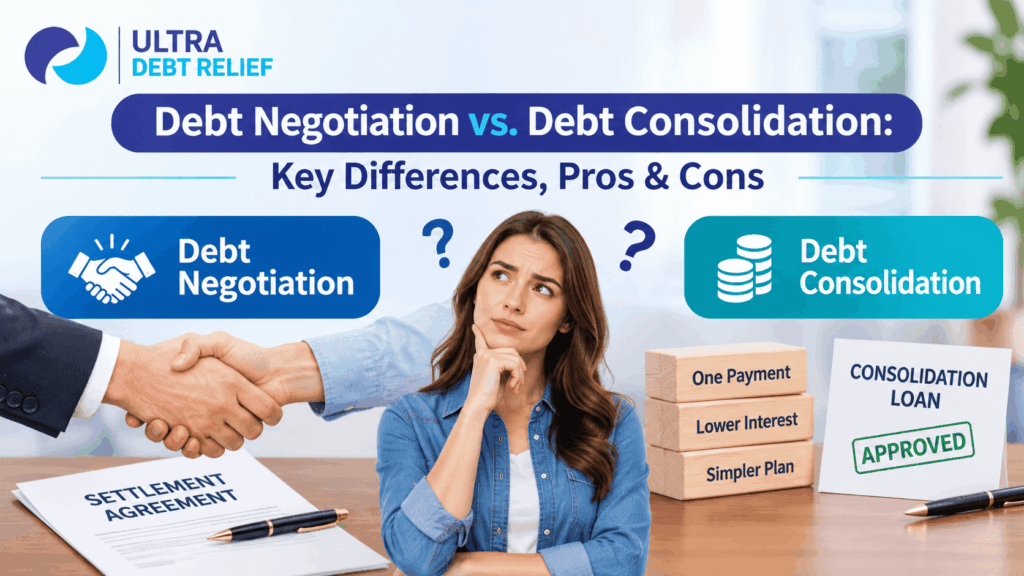
The main difference between debt negotiation and debt consolidation is how they handle your debts.
Debt negotiation involves negotiating with creditors to obtain more manageable repayment terms. Depending on your financial situation and your creditors’ policies, you may be able to request a lower interest rate, reduced fees, an extended repayment period, or a settlement of your eligible debt for a lower amount.
Debt consolidation involves combining your debts into one new loan, usually resulting in one monthly payment.
Below is a table showing the differences:
| Factor | Debt Negotiation | Debt Consolidation |
| Main purpose | Adjust your debt terms | Consolidate your debts |
| How it works | Negotiate with creditors | Get a new loan or repayment arrangement |
| Outstanding debt | Could be reduced | Settled amount |
| Monthly payments | Depend on negotiations | Usually one payment |
| Interest | Could be renegotiated | Depends on the new loan rate |
| Impact on credit | Could negatively impact your credit if you miss payments or settle | Could impact your credit if you apply for a loan or make changes to accounts |
| Main consideration | Whether the creditor will agree to settle | Loan availability and borrowing costs |
Both options are not guaranteed to be the right choice for you. Consider your outstanding debts, income, credit history, and ability to make payments.
What Is Debt Negotiation?
Debt negotiation is when you contact creditors or debt collectors directly to negotiate with them.
This approach is often used when you are struggling to make your monthly payments, whether due to losing your job, unexpected medical expenses, or a reduction in your income.
You can contact your creditors and ask about alternative options.
Depending on your creditors and account, you may be able to:
- Reduce the interest rate.
- Extend the repayment period.
- Waive some late fees.
- Get temporary help with your payments.
- Settle for a lower amount.
However, there is no guarantee that creditors will agree to these requests. The outcome depends on their policies, your account, and your financial situation.
How Does Debt Negotiation Work?
Although the process can vary depending on your creditors, below are the general steps.
1. List Your Existing Debts
Start by listing all your outstanding debts and identifying who you owe them to. Review your balances, interest rates, late fees, and payment dates. Knowing what you owe will help you understand your total debt.
2. Work Out Your Financial Situation
Calculate how much income you receive each month and identify your essential expenses. Determine how much you can realistically afford to pay towards your debts.
3. Contact Your Creditors
Contact your creditors and explain your situation. Ask whether they can offer support through hardship payment arrangements, flexible repayment terms, or other repayment options.
4. Negotiate Your Repayment
Depending on your situation, you can ask for a reduced interest rate, lower payments, waived fees, or a settlement. Make sure you carefully review any proposed terms.
5. Get Written Confirmation
Always ask for written confirmation of what you have agreed. Make sure you understand how much you are paying, when payments are due, what fees apply, and any additional terms.
Benefits and Drawbacks of Debt Negotiation
While debt negotiation can offer more flexibility in your repayment options, it is important to understand its benefits and disadvantages.
| Pros | Cons |
| Could Reduce Debt: A creditor may agree to settle for a lower amount. | Not Guaranteed: A creditor may not agree to settle or negotiate. |
| Flexible Repayment: You may be able to get lower payments or flexible repayment terms. | Could Impact Your Credit: Missing payments and settling can impact your credit history. |
| Could Reduce Fees: Some creditors may agree to waive certain fees. | Could Incur Extra Charges: You may still incur interest and late fees. |
| Alternative Repayment Options: You may be able to explore options that suit your situation. | May Still Be Contacted by Creditors: Creditors may still try to collect the debt and take legal action where permitted. |
| Settlement: If you agree to settle, you may clear an eligible debt for a lower amount. | Tax Implications: Some cancelled debts may be classified as taxable income. |
Also, consider whether you are going to negotiate directly with creditors or work with a debt settlement company. Find out what services they offer, their fees, payment requirements, and any risks involved before signing an agreement.
What Is Debt Consolidation?
Debt consolidation is when you combine your outstanding debts into one new loan.
For example, suppose you have two credit card debts and a personal loan. Each account will have a different interest rate, payment amount, and due date. Keeping track of multiple payments each month can be difficult.
When you consolidate your debts, you may be eligible for a new personal loan. You can use the loan to pay off your eligible debts and have only one monthly payment to make.
One of the main reasons people choose this option is that it makes repayment easier to manage. You only have one repayment to keep track of.
However, you still owe the same amount. You will still have to repay the new loan, including interest and any applicable fees.
How Does Debt Consolidation Work?
Generally, debt consolidation works as follows. Whether you are approved for a loan and what interest rates and repayment terms apply will depend on the lender and your financial situation.
1. Calculate Your Total Debt
Make a list of all the debts you want to consolidate. This includes credit card debts, personal loans, interest rates, and minimum payments.
2. Research Your Options
Look into personal loans, balance transfer credit cards, and other eligible options. Each option will have different eligibility criteria, interest rates, and repayment terms.
3. Compare Interest Rates and Fees
Review the APR, origination fees, balance transfer fees, repayment terms, and overall borrowing costs. A lower monthly payment does not necessarily mean you will save money.
4. Apply for a Loan
Once you have found a suitable option, you can apply. The lender may review your credit history, income, debt, and ability to repay.
5. Pay Off Your Debts
If you are approved for a loan, use the funds to pay off your debts. Double-check that they have been paid.
6. Make Your New Monthly Payment
Once your debts are paid off, you will need to make payments according to your new loan terms. It is important to make regular, on-time payments.
Example
Suppose you have the following debts:
| Existing Account | Balance |
| Credit Card A | $4,000 |
| Credit Card B | $3,000 |
| Personal Loan | $3,000 |
| Total Debt | $10,000 |
You can apply for a $10,000 debt consolidation loan, subject to lender approval and applicable fees.
If approved, you can use the funds to pay off your three debts. This means you will only have to make one monthly payment.
Whether you save money depends on the APR, fees, and repayment terms of the new loan. A longer repayment period may result in lower monthly payments but more interest overall.
Pros and Cons of Debt Consolidation Loans
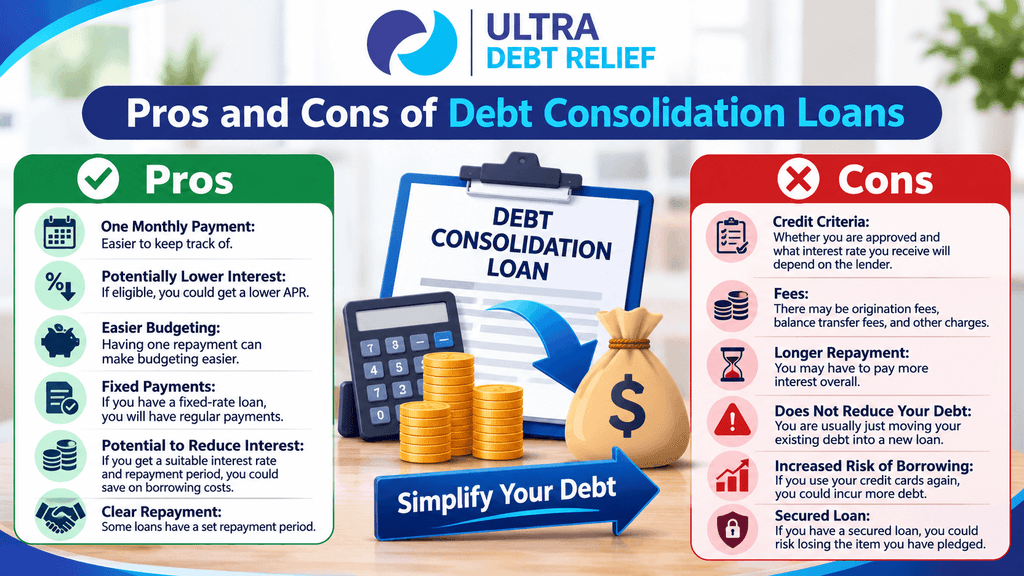
While debt consolidation can make repayment easier by combining multiple debts into one monthly payment, it is important to understand the pros and cons to determine whether it is a suitable financial option for you.
| Pros | Cons |
| One Monthly Payment: Easier to keep track of. | Credit Criteria: Whether you are approved and what interest rate you receive will depend on the lender. |
| Potentially Lower Interest: If eligible, you could get a lower APR. | Fees: There may be origination fees, balance transfer fees, and other charges. |
| Easier Budgeting: Having one repayment can make budgeting easier. | Longer Repayment: You may have to pay more interest overall. |
| Fixed Payments: If you have a fixed-rate loan, you will have regular payments. | Does Not Reduce Your Debt: You are usually just moving your existing debt into a new loan. |
| Potential to Reduce Interest: If you get a suitable interest rate and repayment period, you could save on borrowing costs. | Increased Risk of Borrowing: If you use your credit cards again, you could incur more debt. |
| Clear Repayment: Some loans have a set repayment period. | Secured Loan: If you have a secured loan, you could risk losing the item you have pledged. |
A debt consolidation loan can be a useful option if the terms are favourable. Make sure you compare the overall cost of the new loan with what you would pay if you kept your existing debts as they are.
Should I Choose Debt Negotiation or Debt Consolidation?
There are several factors to consider when deciding between debt negotiation and debt consolidation, such as your income, outstanding debt, credit history, and ability to repay.
When to Consider Debt Negotiation
If you are struggling to make your monthly payments, you may want to consider debt negotiation.
For example, if you have experienced unexpected medical expenses and have a large amount of credit card debt, you may no longer be able to afford your previous payment amount. Contacting your creditors and asking for hardship support or alternative repayment options may be a good place to start.
You may want to consider debt negotiation if:
- You are struggling to make your monthly debt payments.
- You are experiencing financial difficulties.
- You want to negotiate a lower settlement amount.
- You are behind on your payments.
- Your creditors are willing to consider alternative repayment options.
However, some debt settlement options may require you to stop paying your creditors while you save money for potential settlements. This can result in additional interest, late fees, contact from creditors, damage to your credit, and possible legal action.
When to Consider Debt Consolidation
If you are able to make your existing debt payments but want an easier way to repay your debt, you may want to consider debt consolidation.
For example, if you have multiple credit card debts and a stable income, you may be eligible for a personal loan with a lower APR.
You may want to consider debt consolidation if:
- You have multiple credit card or personal loan debts.
- You can make regular payments.
- You are eligible for a suitable interest rate.
- You want to make one payment for multiple debts.
- You have a realistic plan to avoid taking on more debt.
Before applying, make sure you compare the APR, fees, repayment terms, and overall repayment amount. A lower monthly payment does not necessarily mean you will save money.
Other Debt Relief Options in USA
Debt negotiation and debt consolidation are not the only options you can consider. Depending on your financial situation, whether you live in New York, California, Texas, or another U.S. state, there may be other debt relief options you can explore.
1. Debt Management Plans
Debt management plans are usually arranged through a credit counseling company. They can help you create a repayment plan and work with creditors to obtain lower interest rates or waived fees.
Unlike debt settlement, they tend to focus on helping you repay the full principal.
2. Credit Counseling
Credit counseling can help you understand your financial situation and create a realistic budget. Counselors can review your income, expenses, outstanding debts, and repayment options.
A nonprofit credit counseling company in Los Angeles, California, can be a good place to start.
3. Balance Transfer Credit Cards
Some credit cards offer a promotional APR for balance transfers. If you are eligible, you can transfer eligible high-interest debts and save on interest during the promotional period.
However, make sure you review the balance transfer fee, when the promotional period ends, the regular APR, and the required payments. If you do not pay off your debt, you could end up paying more.
4. Bankruptcy
Bankruptcy is a legal process available under federal law. It can provide relief to eligible individuals who are unable to pay their debts.
There are two common types of personal bankruptcy: Chapter 7 and Chapter 13. Chapter 7 usually involves liquidating some non-exempt assets. Chapter 13 involves creating a repayment plan approved by the court.
Bankruptcy can have serious legal and financial implications. Speak to an experienced bankruptcy lawyer in Chicago, Illinois, before making a decision.
What Should I Consider?
Before committing to any debt relief option, make sure you understand what it involves. While an option may seem affordable initially, it could cost you more overall.
Here are six things to consider:
1. Total Debt Owed
Know exactly how much you owe and who you owe it to. This includes credit cards, personal loans, medical bills, and any other eligible debts.
2. Interest Rates and Fees
Compare the interest rates on your existing accounts with those of the new loan or repayment arrangement. Review any origination fees, service charges, late fees, and other applicable fees.
3. Income and Expenses
Work out how much you can realistically afford to pay each month after covering essential costs such as housing, utilities, food, transportation, and insurance.
4. Credit History
Your credit history can affect whether you are approved for a loan and the interest rate you receive. Make sure you check your credit reports.
5. Overall Repayment
Do not focus only on your monthly payment. Calculate how much you will pay overall.
6. Potential Risks
Make sure you understand how each option can affect your credit history, whether creditors may continue contacting you, and any potential legal or tax implications. Ask questions and make sure you understand all the terms of any agreements.
How UltraDebtRelief Can Help
Finding a suitable debt relief option can take some time.
UltraDebtRelief is an affiliate site that can help you find debt relief options. It connects consumers with third-party debt relief professionals and companies.
The site provides information about different debt-related options.
Consumers can:
- Learn about debt settlement and debt consolidation.
- Explore available debt relief options.
- Understand different methods of managing their debts.
- Find connections to third-party debt relief professionals.
- Research suitable options for their financial situations.
If you are looking into ways to manage your outstanding debts, visit UltraDebtRelief.com.
Ready to Look Into Your Options?
Take your time to understand the available options. Make sure you understand what services third parties offer, along with their fees and terms.
UltraDebtRelief is an affiliate site. We are not a lender, creditor, debt settlement company, or credit counseling agency. We connect you with third parties. Availability, eligibility, services, and terms will vary depending on the provider and your situation.
Conclusion
When you have multiple financial commitments, managing them can become very stressful. Understanding the difference between debt negotiation and debt consolidation is an important first step.
You may be able to negotiate with your creditors to repay your debt in a way that you can afford. In some cases, you can settle your eligible debts for a reduced amount. Debt consolidation can make repayments easier by combining debts into one loan. However, there are costs involved.
Consider your income, debts, credit history, and financial goals to determine which option may be best for you. Compare interest rates, fees, repayment periods, and possible consequences.
If you are looking for information about debt relief options in USA, UltraDebtRelief can help you understand the different options available and connect you with third-party debt relief professionals and companies.
By taking the time to understand your options and the terms providers offer, you can make informed decisions.
Disclaimer: This article is for general informational and educational purposes only. It should not be considered financial, tax, or legal advice. Debt relief options may vary depending on the provider. Interest rates, fees, eligibility, and results may vary. Be sure to read all agreements carefully and seek professional advice.
Frequently Asked Questions
What Is the Main Difference Between Debt Negotiation and Debt Consolidation?
Debt negotiation involves negotiating with creditors to change the terms of your existing debts. Debt consolidation involves combining all your debts into one new loan. Debt negotiation can reduce your debt, whereas debt consolidation usually changes how you repay it.
How Does Debt Consolidation Work in USA?
Generally, debt consolidation involves getting a new loan to pay off multiple debts. Once you have paid off your eligible debts, you will have one monthly payment to make. Whether you are approved, and what interest rates and repayment terms apply, will depend on the lender and your financial situation.
What Are the Pros and Cons of Debt Consolidation Loans?
Debt consolidation loans can make monthly payments easier, potentially offer lower interest rates, and provide clear repayment terms. However, there may be origination fees, credit criteria, longer repayment periods, and a risk of getting into more debt if you continue using your credit cards.
Can Debt Negotiation Reduce My Debt?
It could. A creditor may agree to settle for a lower amount. However, creditors are not obliged to do so, and there is no guarantee that you will have a lower amount to pay.
Can Debt Consolidation Affect My Credit Score?
Requesting a debt consolidation loan can result in a hard inquiry on your credit file. Opening a new account and closing old ones can affect your credit profile. However, regular payments will contribute positively to your credit history.
Is Debt Settlement the Same as Debt Negotiation?
No. Debt negotiation involves negotiating with your creditors. Debt settlement is just one possible outcome of this process, in which your creditor agrees to accept less than the full amount owed.
Can I Get a Debt Consolidation Loan With a Poor Credit History?
Some lenders will consider applicants with less-than-perfect credit histories. However, there is no guarantee that you will be approved, and you could be offered a higher interest rate. Be sure to compare offers.
Is Debt Negotiation a Better Option Than Debt Consolidation?
It depends on your situation. If you are unable to pay what you owe and your creditors are willing to negotiate, debt negotiation may be a good option. If you qualify for a loan that you can afford, debt consolidation may be a good option.
What If I Cannot Pay My Debts?
Contact your creditors as soon as possible to see whether they can offer any hardship options. You can also contact a nonprofit credit counselor to understand what options are available. If you ignore your debts, you could incur additional charges, and your debt could be sent to collections.
Are Debt Consolidation Loans Worth It?
If the new interest rate, fees, and repayment period are affordable, a debt consolidation loan could be a good option. Compare the total amount you will be paying back.